
Guide ·
What to drink for energy: coffee, matcha or fresh juice
Around 11 or around 3pm, that moment arrives. Heavy eyes, emails dragging on, and your hand reaching for something to drink.
We see that moment from behind the bar every day. Before you decide what to drink, it helps to know what is actually going on.
What caffeine does, and what it does not
During the day, adenosine builds up in the brain, a molecule that slowly tells us we are tired. Caffeine binds to the same spots as adenosine and temporarily shuts the door on it. That is why you feel more awake, but the tiredness does not disappear, it just waits. When the caffeine wears off, everything that built up arrives at once.
Caffeine takes about half an hour to kick in, and the body breaks it down over several hours. A coffee at 5pm is often still there when you go to bed. That is why the “no caffeine after 3pm” rule makes sense.
How much is too much
The European Food Safety Authority (EFSA) says up to 400 mg of caffeine a day is safe for healthy adults, and up to 200 mg at once. For pregnant women the limit is 200 mg a day. An espresso has roughly 60–80 mg, depending on the coffee and how it is made. Matcha depends on how much powder goes into the cup.
Coffee: quick and familiar
Espresso, cappuccino, iced coffee. Coffee is the quickest choice and a taste everyone knows. It sits best in the morning and up to early afternoon. If cow's milk does not agree with you, oat or almond milk changes the taste less than you think.
Matcha: the whole leaf in your cup
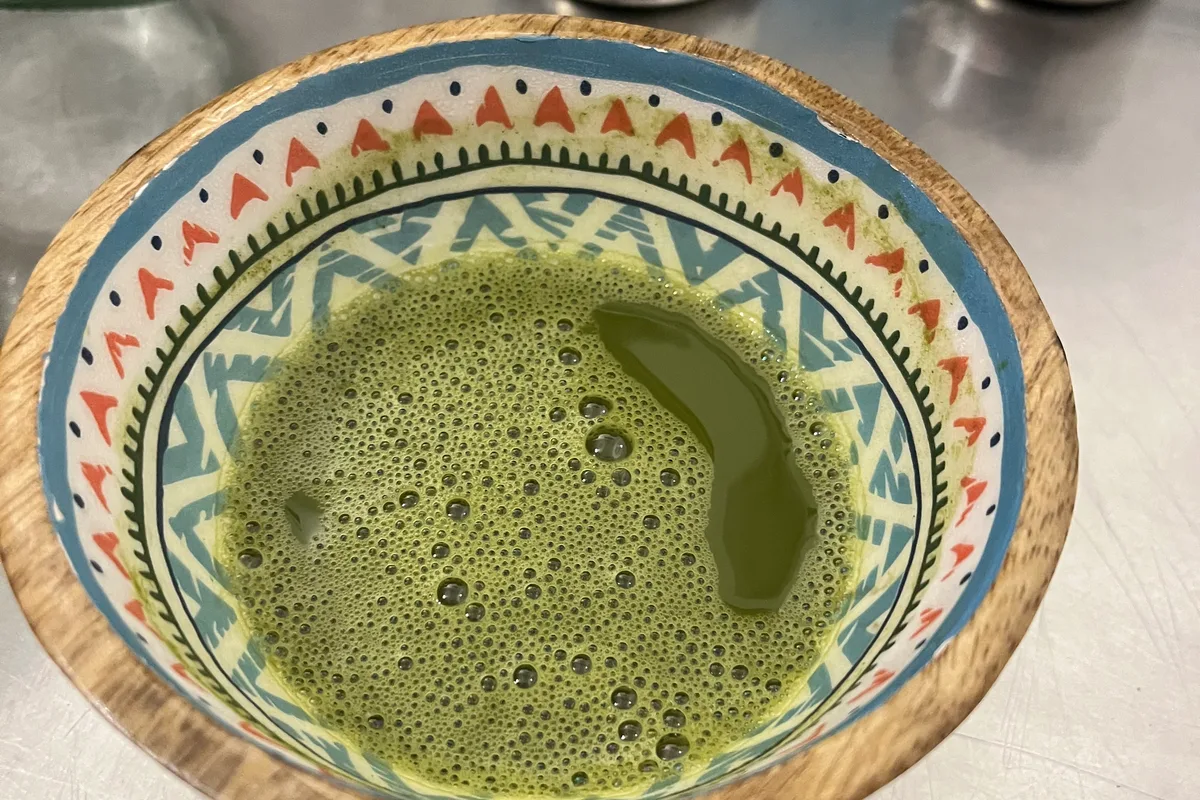
Matcha is a stone-ground green tea leaf. With regular tea you drink what the leaf releases into water; with matcha you drink the whole leaf. Alongside caffeine it has L-theanine, an amino acid found naturally in green tea. Many people pick it in the afternoon, when a third coffee would be too much, and sip it slowly, with milk.
Caffeine-free
Cold water, freshly squeezed citrus, a spicy ginger shot. Sometimes all it takes to wake up is something cold, sour or spicy. And sometimes tiredness is not tiredness but thirst: a glass of water is step one.
What is not in the cup
Ten minutes outside, in daylight. Getting up from your desk and walking to the end of the street. Eating something real instead of another coffee on an empty stomach. The best “energy” is often not a drink, but a break.
Quick pick
- Morning, in a rush: espresso or cappuccino.
- Afternoon: matcha, or nothing with caffeine after 3pm.
- No caffeine: water, fresh citrus, a ginger shot.
- Tired after lunch: a ten-minute walk before the second coffee.
FAQ
What is better for energy, coffee or matcha?
Both contain caffeine. Coffee is stronger in taste and quicker; matcha is sipped more slowly, usually with milk, and also contains L-theanine. Pick by taste and time of day.
How much caffeine is too much?
According to EFSA, up to 400 mg a day and up to 200 mg at once for healthy adults; up to 200 mg a day during pregnancy. An espresso has roughly 60–80 mg.
Until what time is it fine to drink coffee?
The body breaks caffeine down over several hours, so many people stop around 3pm to keep their sleep calm.
What can I drink for energy without caffeine?
A glass of water, freshly squeezed citrus juice, or a spicy shot of ginger, honey and lemon.